

Ergonine
The Institute
Independent research into resonance, energy exchange and the persistence of alignment. Connecting controlled experiments with observations from a worldwide field network.
The research environment

The Institute
The Ergonine Institute for Resonant Energy Research studies the conditions under which separate systems begin to act together. Its work brings measurement, physical modelling and field observation into a shared investigation of the Pulse: a recurring structure in the timing and exchange of energy.
The Institute grew from a question that appeared in otherwise unrelated observations. Mechanical systems, environmental processes and collective movement sometimes maintained a degree of coordination that their immediate conditions could not explain. Comparing those observations revealed a common pattern. Establishing its presence gave the research a focus; understanding what sustains it remains the work.
ERGONINE follows that question across the boundaries of individual disciplines. An observation made in the field can suggest an experiment in the laboratory. A result obtained under controlled conditions can change what an agent looks for elsewhere. Each setting contributes to an account that no single instrument or location can provide on its own.
Controlled research
Inside the laboratory, the investigation begins with a stable reference. Instruments are calibrated against one another, the surrounding temperature and vibration are recorded, and the system is observed before an external rhythm is introduced. These baseline measurements establish how it behaves without deliberate excitation.
Researchers then vary the driving frequency, the strength of the interaction and the duration of exposure. Repeated trials show how alignment develops, where it becomes unstable and whether the same behaviour returns when the conditions are restored. Independent sensors follow the response so that the timing of an instrument can be distinguished from the timing of the system being measured.
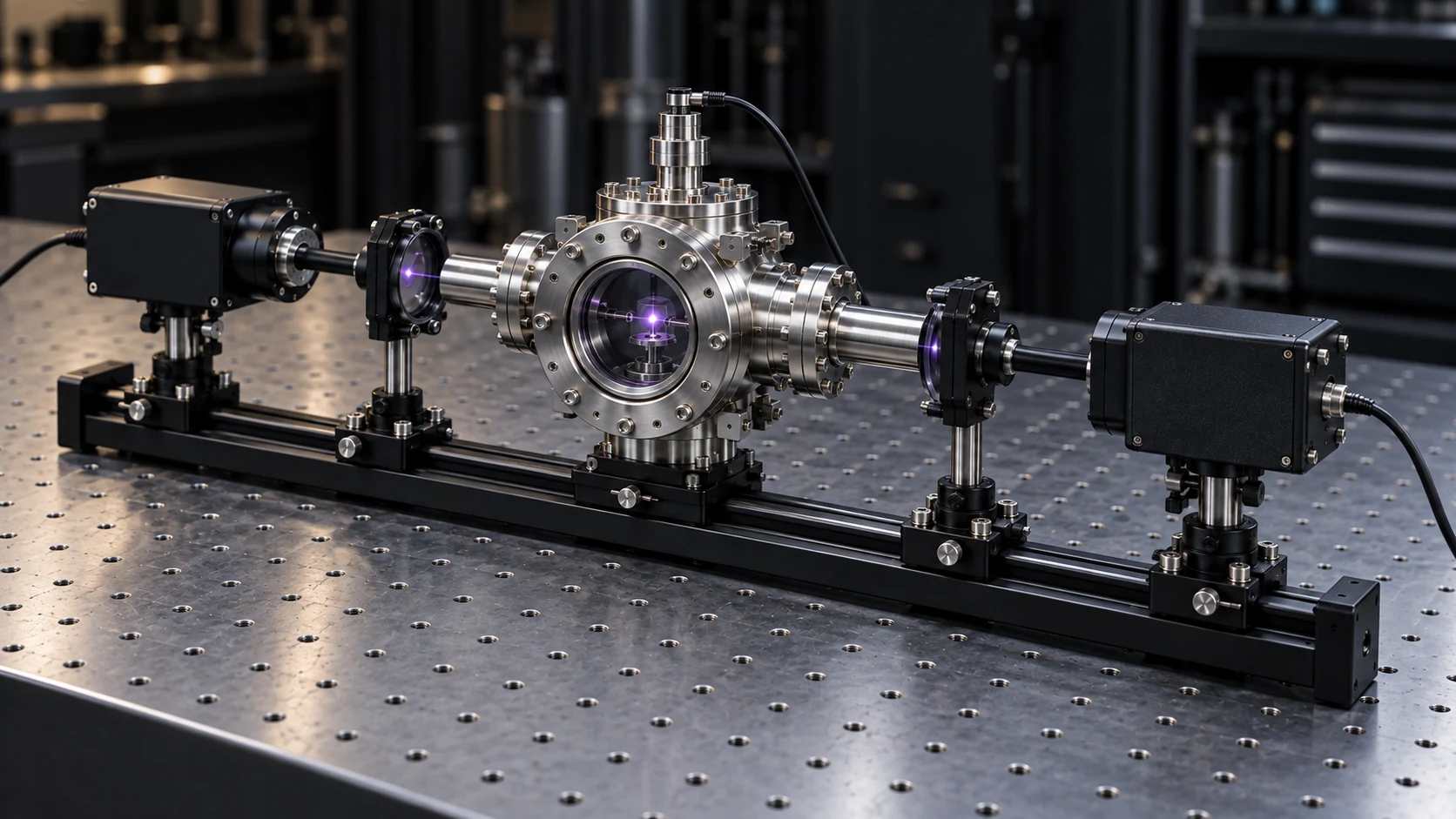
The observation continues after the driving signal is withdrawn. A response that gradually settles is compared with one that retains its phase for longer than expected. This interval is central to the study of phase memory: it allows the Institute to examine what a sustained period of resonance leaves behind, and how that retained state eventually releases.
The field network
The Institute’s field agents work wherever recurring motion and energy exchange can be observed over time. Their settings include industrial structures, environmental systems and groups of people whose movement and responses become coupled. The surrounding conditions are part of the observation: loading, material, temperature, duration and the behaviour of neighbouring systems can all influence the result.
Agents follow the Pulse Resonance Index through successive cycles, recording how alignment emerges, how long it holds and what interrupts it. A brief peak and a persistent state tell different stories. Observations are compared across locations to identify relationships that survive changes in the setting, then brought into controlled research where individual conditions can be examined more closely.
The network gives the Institute access to conditions that a laboratory can only partially reproduce. It also brings the research back into contact with systems that behave unpredictably and influence one another in real time. Agent identities and active observation locations remain undisclosed, allowing the work to continue without drawing attention to the conditions under study.
The continuing investigation
The Pulse has been identified within the Institute’s observations. Its origin, the reach of its interactions and the limits of sustained resonance remain open. Current work follows the transition from temporary coordination to a state that persists: how it forms, how energy moves through it and why some systems retain their alignment after others have returned to their ordinary behaviour.
The longest observations raise a further question. If a system can retain the timing of an earlier interaction, that history may affect what happens when it couples to another system later. ERGONINE investigates whether repeated periods of alignment leave a cumulative effect, and which conditions allow that effect to survive between observations.
The Institute’s work is organised around this continuity: following an effect from its first appearance, through sustained alignment, into what remains after the original event has ended. The Pulse provides the common reference. Each experiment and field observation asks how much of that shared structure a physical system can retain.