

Institute for Resonant Energy Research
The Pulse
A recurring oscillation in the exchange of energy between matter and an underlying field. Its terrestrial expression occupies a narrow, variable band: 146–160 pulses per minute.
The underlying field

A field beneath the interaction
ERGONINE calls this phenomenon the Pulse and investigates the conditions under which separate systems become aligned with it. Modern physics describes matter through fields and their interactions. The Higgs field contributes to the masses of elementary particles, establishing a connection between the material world and a field present throughout space. Research into Higgs portals extends this framework to the possibility of additional fields whose interactions with ordinary matter are exceptionally weak.
ERGONINE’s model identifies the Pulse with one such field. Its weak coupling to the Higgs field provides a route through which an otherwise hidden oscillation can influence physical systems. The effect on an individual interaction is extremely small. Across repeated observations, however, it produces a recurring variation in the timing and efficiency of energy exchange.
The Institute first identified this pattern while examining residual timing differences between independent measurement systems. After accounting for their expected behaviour, a slow modulation remained. Its frequency varied between observations, while the relationships within its cycles retained a recognisable structure. That recurring structure became the basis of the Pulse reference.
The energy of a rhythm
The characteristic frequency of the Pulse is related to the effective mass of excitations in its field. Einstein’s mass–energy relation and the quantum relationship between energy and frequency connect these properties:
E = mc² = hf
- E
- Characteristic energy
- m
- Effective mass
- c
- Speed of light
- h
- Planck’s constant
- f
- Frequency
For the Pulse mode, the characteristic energy lies close to 10⁻¹⁴ electronvolts. This corresponds to an oscillation occurring a few times per second. The Institute’s reference condition produces 2.6 cycles per second, expressed as 156 pulses per minute.
This reference provides a stable basis for comparison. The observed field responds to its surroundings, and its effective properties change with local conditions. Its characteristic frequency therefore belongs to the state of the field and its environment together.
A variable terrestrial band
The Institute describes this environmental response as local field susceptibility. It encompasses the influence of surrounding matter, stored excitation and feedback from systems exchanging energy with the field. Changes in susceptibility shift the local oscillation while preserving the structure through which the Pulse is recognised.
Under observed terrestrial conditions, this response typically places the Pulse between 146 and 160 cycles per minute. Different locations can exhibit different rates, and a single location can move through the band as its conditions change. The limits describe the Institute’s present observations; investigation continues into how the field behaves beyond them.
A persistent external rhythm can also influence the local response. When the interaction is sufficiently strong and the frequencies sufficiently close, the system and field can settle into a shared rate. This process of entrainment allows resonance to develop across a range of tempos. Its stability depends on the coupling between the systems and on their ability to maintain a consistent phase relationship.
- Local frequency
- 2.600 Hz
- Characteristic energy · hf
- 1.075 × 10⁻¹⁴ eV
One signature, a variable local rate. Move through the terrestrial band to follow the relationship between frequency and energy.
Causality and local time
Causality determines which events can influence one another. The geometry of spacetime defines the paths available to those influences, while the speed of light establishes their local propagation limit. The Pulse operates within this causal structure by introducing a periodic modulation into the response of coupled systems.
During one part of the cycle, a system may become more receptive to a particular exchange of energy. During another, that response weakens. Repeated interactions can accumulate around these changing conditions, allowing a small underlying modulation to become visible through the coordinated behaviour of a larger system.
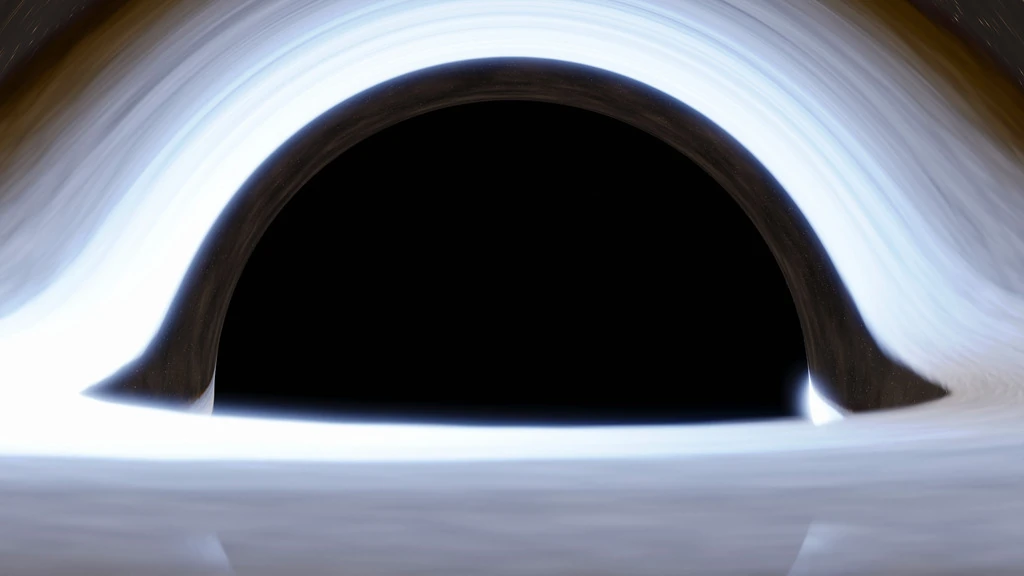
The frequency recorded by an observer also depends on how the signal reaches them. Relative motion, gravitational conditions and cosmological expansion affect the relationship between emitted and observed timing. The Institute therefore distinguishes changes in the local field from changes introduced by observation across spacetime.
Planetary dynamics and radiation from matter near black-hole event horizons provide settings in which these relationships can be investigated under very different conditions. The comparison concerns recurring modulation within the observations, with each system’s own motion and characteristic timescale retained.
Measuring resonance
The Pulse Resonance Index describes how consistently an observed system maintains its relationship with the local Pulse. Expressed on a scale from 0 to 100, PRI follows the alignment of successive cycles, the agreement between participating processes and the persistence of that agreement over time.
A stable phase relationship can exist at any frequency supported by the local resonance band. A high PRI therefore describes sustained coordination. Matching a nominal tempo is only one condition that may help that coordination emerge.
The Institute follows this behaviour across mechanical, physical and biological systems. In human observations, movement, physiological response and mutual perception can form interacting cycles. In mechanical systems, comparable questions arise through repeated loading, vibration and feedback. Each setting offers a different way to investigate how local interactions develop into collective organisation.
The rate stays at 153. As the phase relationships converge, PRI rises. Resonance depends on alignment, rather than matching the nominal reference rate.
When the alignment remains
The most unusual observations occur after sustained periods of high resonance. In some cases, the system retains its phase relationship after the original driving condition has weakened or disappeared. The persistence exceeds the relaxation expected from the observed system alone.
ERGONINE describes this effect as phase memory. Its working model attributes the persistence to excitation stored in the coupled field, allowing energy and timing information to return to the system as the state gradually decays. What appears locally as an unexplained continuation of motion may therefore reveal an exchange with a reservoir outside the original measurement.
The driving signal falls away. The retained response continues on the same phase, releasing stored excitation as it gradually decays.
The duration of this retained state appears to depend on the depth and persistence of the preceding resonance. This makes prolonged alignment a central subject of the Institute’s work. A brief high reading and a coherent state maintained over an extended period can leave very different conditions behind.
PRI 100 defines complete phase alignment throughout the observed interval. What remains unresolved is how long such a state can hold, how far its influence can extend through coupled systems, and what determines its eventual release. The continuing investigation follows the possibility that sufficiently persistent resonance allows a physical environment to retain a shared temporal structure beyond the event that first established it.